Description
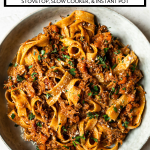
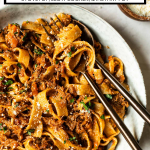
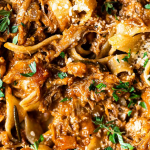
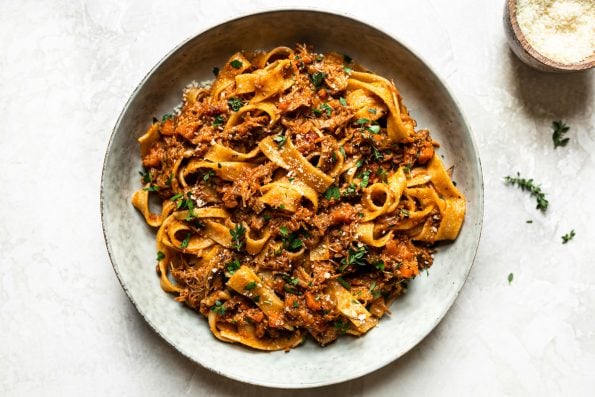
Succulent, juicy pork shoulder slowly simmers in a rich tomato sauce until it’s fall-apart tender before finishing with a splash of cream and a generous sprinkling of parmesan. Toss it into pappardelle pasta for the best homemade Italian meal. You will love this Slowly Braised Pork Ragu recipe!
Ingredients
Scale
for the Braised Pork Ragu Sauce:
- 3 tablespoons olive oil, divided
- 2 ½ pounds boneless pork shoulder, trimmed of excess fat and cut into 6 large pieces
- 3 large carrots, peeled and diced
- 1 large yellow onion, finely diced
- 1 stalk celery, finely diced
- 8 cloves garlic, finely chopped or grated
- 2 tablespoons tomato paste
- 1 cup dry white wine
- one (1) 0.75-ounce package fresh “poultry herb blend” (or approx. 2 sprigs fresh rosemary, 4 sprigs fresh sage leaves and 12 sprigs fresh thyme)
- 2 bay leaves
- one (1) 28-ounce can crushed tomatoes
- 2 cups water or low-sodium chicken broth or stock
- kosher salt and ground black pepper, to season
for the Pork Ragu Pappardelle:
- 20-30 ounces dried pappardelle pasta or other pasta of choice
- ½ cup heavy cream
- heaping ½ cup grated parmesan
- for serving, as desired: grated parmesan, finely chopped fresh herbs, etc.
Instructions
Braised Pork Ragu Sauce:
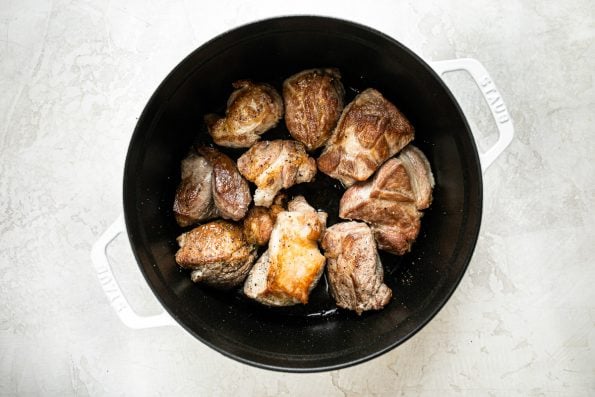
- Brown the pork shoulder: Add 2 tablespoons olive oil to a large, heavy-bottomed pot (I use a 5-qt Dutch oven) over medium-high heat. Use paper towel to pat the pork shoulder as dry as possible. Generously season the pork shoulder with 2 teaspoons each kosher salt and ground black pepper. Once the oil in the pot shimmers, carefully add in the seasoned pork shoulder. Work in batches, as necessary, to avoid overcrowding the pot (which prevents browning). Cook for 4-5 minutes per side, until nicely browned. Transfer the browned pork to a plate and set aside.
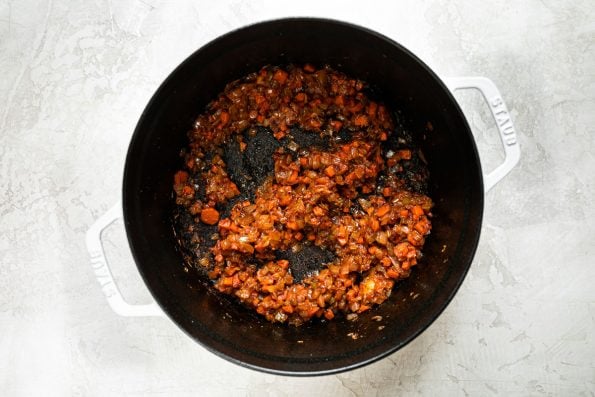
- Brown the soffritto: If needed, add the remaining 1 tablespoon olive oil to the same pot used in Step 1 and reduce heat to medium. Once hot, add in the soffritto (carrots, onion, and celery), seasoning with ½ teaspoon each kosher salt and ground black pepper and stirring to combine. Cook, stirring occasionally, until deeply browned, 15-20 minutes.
- Add aromatics. Add the garlic to the pot with the soffritto. Stirring constantly, cook until fragrant, 1-2 minutes. Add the tomato paste to the pot, stirring to coat the soffritto. Cook 2-3 minutes, until browned.
- Deglaze: Increasing the heat to medium-high, pour the white wine into the pot. Stir constantly, using a wooden spoon to scrape up any browned bits that may have formed at the bottom of the pot. Cook for 4-5 minutes, until the wine is almost completely absorbed into the soffritto.
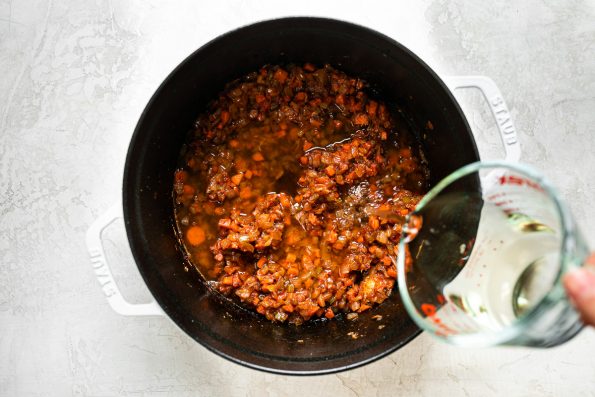
- Simmer: Tie the herbs together using kitchen twine (or finely chop if you do not have twine), then add to the pot with the bay leaves. Add the crushed tomatoes, water (or broth/stock), and browned pork shoulder from Step 1. Stir to combine. Bring the mixture to a boil. Reduce heat to maintain a gentle simmer. Cover and cook, stirring occasionally, for 2 ½ – 3 hours, or until the pork is fall-apart tender. If the ragu begins to reduce too much (i.e. it loses too much of its liquid too quickly), feel free to add in a splash more water and/or reduce the heat further.
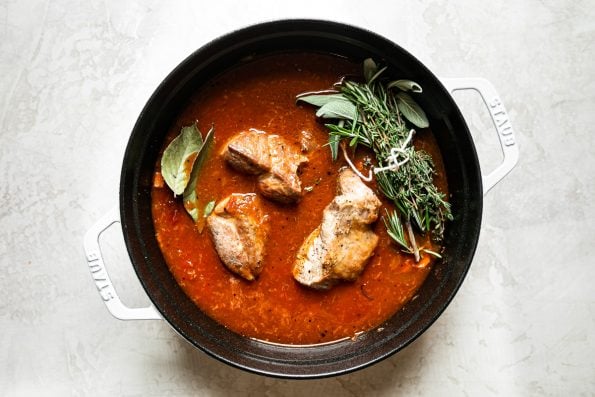
- Finish the braised pork ragu: Carefully transfer the pork to a plate or cutting board. At this point, you can remove and discard the spent herbs and bay leaves from the pot, as well. Use tongs or 2 forks to shred the pork into bite-sized pieces. Return the shredded pork to the pot with the ragu. Stir to combine. At this point, you can cool and store for later use (see Recipe Notes for storage and freezing directions), or proceed with making the pork ragu pappardelle (below).
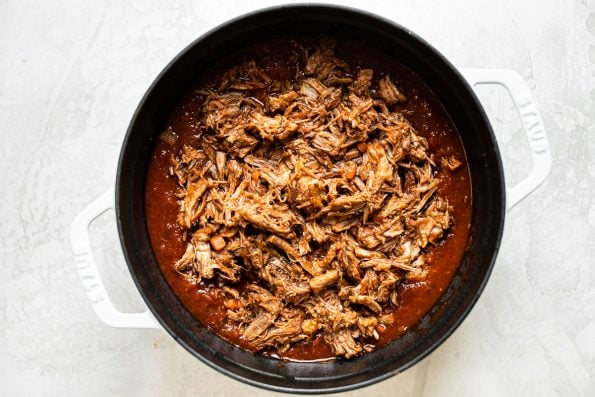
Pork Ragu Pappardelle:
- Boil the pasta: Bring a large pot of salted water to a boil. Add the pappardelle and cook, stirring occasionally, until the pasta is cooked to al dente according to package directions. Carefully dip a liquid measuring cup into the pot, reserving about 1 cup of the starchy pasta water, and set aside. Carefully drain the pappardelle – do NOT rinse it!
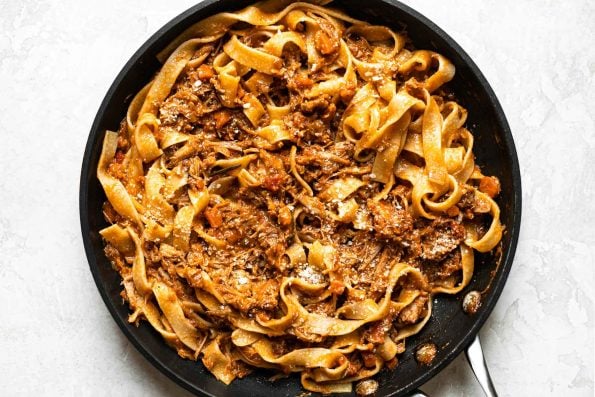
- Finish the pork ragu sauce: Meanwhile, as the pasta boils, bring the braised pork ragu up to a simmer. Stir in the heavy cream and parmesan cheese. Continue to simmer over low heat, stirring occasionally.
- Pork ragu pappardelle: Add the cooked pappardelle pasta to the pot with the braised pork ragu sauce, tossing to coat. The pork ragu should evenly coat the pasta. Add in some of the reserved pasta water if the ragu needs to loosen up a little; add in an extra handful of parmesan if it needs to tighten up a little. Cook over medium heat for 1-2 minutes, allowing the pasta to meld with and absorb some of the ragu.
- Serve: Portion the pork ragu pappardelle into individual pasta bowls, topping with additional grated parmesan, chopped fresh herbs, and/or crushed red pepper as desired. Serve immediately. Enjoy!
Notes
- Make-Ahead, Storage and Freezing:
- Storage Instructions: Pork ragu sauce stores incredibly well – it’s the type of thing that gets even better as it sits and its flavors have the chance to meld together. To store, prep the sauce through Step 6 of Recipe Directions, above. Once cooled, transfer to an airtight container and store in the refrigerator for 4-5 days. Whip up a batch of pork ragu pappardelle during the week by reheating the braised pork ragu in a skillet, and completing the recipe according to “Pork Ragu Pappardelle” Steps 1-4, above.
- Freezing Instructions: Pork ragu is also incredibly freezer-friendly. To freeze, transfer the cooled pork shoulder ragu sauce to a freezer container (or divide it up between multiple freezer containers for smaller portions). Freeze for up to 3 months. To thaw, place the frozen ragu in the refrigerator overnight or submerge the freezer container in room temperature water for a quicker thaw. Reheat the ragu sauce in a skillet. The thawed ragu sauce will be a little watery at first, which is totally expected. Let any residual water simmer out before completing the recipe according to “Pork Ragu Pappardelle” Steps 1-4, above.
- Alternate Cooking Methods:
- Oven Braised Pork Ragu: Prep the recipe according to Steps 1-5, above. Rather than braising on the stovetop, transfer the covered pot to a 325 degree F oven. Braise in the oven for 2 ½ – 3 hours, until the pork is fall-apart tender, then finish the pork ragu sauce as directed in Step 6 and complete the recipe according to “Pork Ragu Pappardelle” Steps 2-4.
- Slow Cooker Pork Ragu: Prep the recipe according to Steps 1-4, above. Transfer the soffritto mixture to the slow cooker, along with the aromatics, tomatoes, water (or broth), and browned pork shoulder as directed in Step 5. Slow cook on high for 4-5 hours or on low for 7-8 hours, stirring occasionally. Finish the pork ragu sauce as directed in Step 6 and complete the recipe according to “Pork Ragu Pappardelle” Steps 2-4, which you can do right in your slow cooker. If your slow cooker has a searing/browning feature, you can use it to cook the entire ragu sauce recipe (Steps 1-6) in the slow cooker.
- Electric Pressure Cooker Pork Ragu: Use your electric pressure cooker’s “Sauté” setting to cook the recipe according to Steps 1-5, above. Cover and seal the pressure cooker and cook on manual high pressure for 50 minutes. Allow the pressure cooker to naturally release pressure for 10 minutes before carefully flicking the valve to its “venting” position to vent out any residual pressure. If the ragu seems a little too liquidy, feel free to turn on the Sauté setting again, letting the sauce simmer down a little before finishing as directed in Steps 6. Complete the recipe according to “Pork Ragu Pappardelle” Steps 2-4, which you can do right in your pressure cooker pot.